Evaluating 12 Abstract Black White Zentangle Pattern Collections for Design Projects
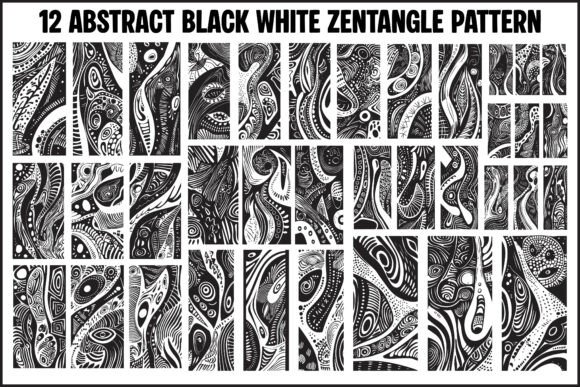
In the realm of graphic design and digital art, the demand for versatile, high-quality assets is constant. Among the various styles available, monochrome pattern collections hold a specific niche due to their adaptability and timeless aesthetic. A collection described as 12 Abstract Black White Zentangle designs represents a specific category of resources featuring intricate, hand-drawn decorative symbols. These assets are typically composed of organic shapes, dots, curves, and artistic textures, offering a distinct visual language that bridges the gap between traditional pen-and-ink illustration and modern digital application.
For designers, artists, and content creators evaluating whether such a pack aligns with their workflow, it is essential to look beyond the surface-level description. Understanding the technical specifications, the nature of the artwork, and the practical applications allows for an informed decision regarding its utility in professional or personal projects.
Understanding the Composition and Style
The term "Zentangle" refers to a method of creating structured patterns, often resulting in abstract imagery that is both complex and harmonious. When applied to a digital asset pack containing 12 unique designs, the expectation is a curated set of non-repetitive visuals that maintain a cohesive style. These abstract black and white entangle pattern designs rely heavily on line weight variation, density, and the interplay between positive and negative space.
The "hand-drawn" aspect is a critical differentiator. Unlike geometric patterns generated by algorithms, these designs feature the subtle imperfections and organic flow characteristic of human artistry. This includes varying stroke widths, natural curves, and textured fills that mimic ink on paper. For users seeking a modern monochrome style that feels authentic rather than sterile, this approach offers significant value. The inclusion of decorative symbols adds layers of detail that can serve as focal points in a larger composition or as subtle background elements.
Technical Formats and Their Implications
A comprehensive evaluation of any digital asset pack must consider the file formats provided. A robust collection typically includes EPS, SVG, PNG, and JPG files, each serving a distinct purpose in the design pipeline.
- EPS Files (12 Files): Encapsulated PostScript files are the industry standard for professional printing. Being fully editable vector artwork, they allow designers to manipulate individual anchor points, strokes, and fills within software like Adobe Illustrator or CorelDRAW. This format is best for large-scale designs where resolution independence is paramount, such as billboards, vehicle wraps, or large-format posters.
- SVG Files (12 Files): Scalable Vector Graphics are essential for web development and digital interfaces. Like EPS, they offer infinite scalability without quality loss, but they are optimized for browsers and cutting machines (such as those used for vinyl decals). The ability to easily edit strokes and colors via CSS or design software makes them ideal for responsive web graphics and interactive projects.
- PNG Files (12 Files): Portable Network Graphics with transparent backgrounds are crucial for digital overlays and mockups. High-resolution PNGs allow users to place the zentangle patterns directly onto other images or colored backgrounds without dealing with white bounding boxes. They are ready to use immediately, requiring no editing, which streamlines workflows for social media graphics or quick compositing.
- JPG Files (12 Files): Joint Photographic Experts Group files provide high-quality raster images suitable for universal compatibility. While they lack transparency, they are universally supported across all devices and software, making them excellent for previews, email attachments, or situations where vector editing is not required.
Practical Applications and Use Cases
Determining whether this collection fits a specific project requires analyzing the intended output. The versatility of abstract black white zentangle patterns makes them suitable for a wide array of applications:
Textile and Surface Design: The high-detail line art and organic shapes translate well to fabric printing. Whether for fashion textiles, home decor wallpapers, or packaging materials, the monochrome palette ensures the patterns remain striking even when printed on colored substrates or used as a base for overprinting.
Branding and Identity: For brands seeking a sophisticated, artisanal, or mindful image, these patterns can serve as distinctive brand elements. They work effectively on business cards, letterheads, and packaging, adding a layer of texture and depth that flat colors cannot achieve.
Creative and Coloring Projects: The intricate nature of the lines makes these designs perfect for adult coloring books or educational materials. The clear distinction between lines and spaces invites interaction, allowing users to add their own color interpretations.
Digital Backgrounds and Overlays: In web design and video production, the transparent PNGs can be used as watermarks or subtle background textures to add visual interest without overwhelming the primary content.
Considerations and Tradeoffs
While the benefits of such a collection are clear, there are tradeoffs and considerations that potential users should weigh. The primary consideration is the complexity of the line work. Highly detailed zentangle patterns can sometimes cause issues when scaled down significantly; fine lines may disappear or merge, reducing legibility. Therefore, these assets are generally a strong fit for medium-to-large scale applications but may require simplification for small iconography or favicon usage.
Another factor is the monochrome limitation. While black and white offers maximum flexibility, projects requiring immediate full-color integration may necessitate additional time for recoloring. Although vector formats (EPS and SVG) facilitate easy color changes, raster formats (JPG and PNG) do not. Users must ensure they have the appropriate software and skills to modify vector files if color customization is a requirement.
Furthermore, the "hand-drawn" aesthetic implies a specific stylistic direction. If a project demands rigid, mathematical precision or a ultra-modern, flat-design look, these organic, textured patterns might clash with the overall visual identity. In such cases, geometric or generative alternatives may be worth considering.
Making the Decision
Ultimately, selecting a pack of 12 Abstract Black White Zentangle designs depends on the balance between artistic intent and technical requirements. If the goal is to incorporate organic, textured, and intricate details into a project that values craftsmanship and depth, this type of collection is an excellent resource. The inclusion of multiple file formats ensures that the assets can transition seamlessly from concept to print to digital deployment.
However, if the project prioritizes speed over detail, requires strictly geometric forms, or involves extremely small-scale reproduction, alternative assets might prove more efficient. By evaluating the specific needs regarding scalability, editability, and stylistic alignment, creators can determine if these hand-drawn decorative symbols will enhance their work or if a different approach is necessary. The value lies not just in the number of files included, but in how effectively the intricate line art and artistic textures can be leveraged to meet the specific goals of the design brief.